
Introduction: Breaking Free from the Tyranny of the Proscenium Arch
For centuries, the architectural convention of the Western proscenium arch has imposed a rigid, artificial separation between the spectator and the dramatic action. Seated in uniform rows in darkened auditoriums, audiences are conditioned to consume live art as passive voyeurs, detached from the visceral, unpredictable pulse of the living world. This conventional architectural framework sanitizes live theatre, reducing complex human narratives to framed visual commodities. At Black & White Craft, our foundational curatorial thesis under the artistic direction of Opeyemi Farimoyo is built upon the radical dismantling of this spatial barrier. We conceptualize live performance not as a detached presentation to be viewed from afar, but as an organic, participatory encounter embedded directly within public spaces, historical botanical glasshouses, waterfront settlements, and active commercial trading centers.
Shifting theatrical production from static indoor auditoriums into living physical ecosystems fundamentally transforms the entire dramaturgical equation. In a site-specific environment, the physical terrain ceases to be a decorative backdrop; it becomes an active dramatis persona that challenges the actors’ physical bodies, alters the physics of acoustic propagation, and demands an entirely new standard of structural engineering, audience navigation, and environmental risk governance. When the natural landscape becomes the stage, every rustle of wind, shift in sunlight, and ambient environmental sound is incorporated into the living fabric of the performance.
1. The Acoustic Physics and Thermal Dynamics of Victorian Glasshouses
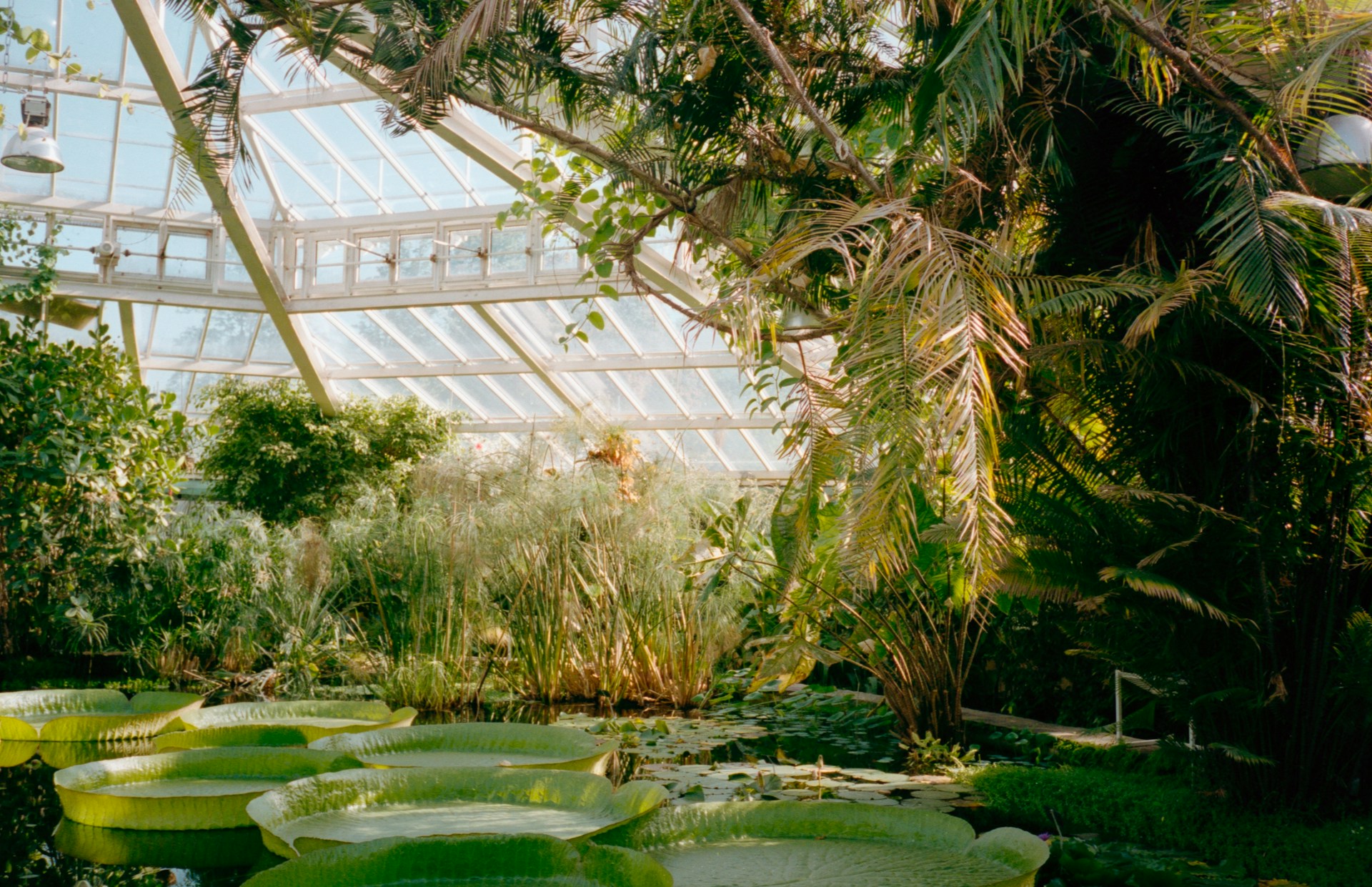
Staging promenade theatre inside historic Victorian glasshouses—such as our landmark production of A Day in Colonial Garden within the Sheffield Botanical Gardens—presents extraordinary technical and environmental challenges that confound conventional sound engineering principles. Heritage glass structures were originally engineered for horticultural propagation and solar heat retention rather than acoustic clarity. The physical interplay of vast expanses of reflective glass panels, intricate wrought-iron framework, and damp brick masonry creates an acoustic environment plagued by severe high-frequency flutter echoes and unpredictable reverberation times frequently exceeding 3.5 seconds.
Furthermore, internal ambient temperatures inside botanical pavilions can swing violently between midday sun exposure and evening cool downs, directly altering atmospheric air density, humidity ratios, and the physical velocity of sound wave propagation. As temperature rises, the speed of sound increases proportionally, shifting acoustic delay alignments established during morning soundchecks. To overcome these acoustic hurdles, standard high-SPL frontal line arrays must be completely discarded. Deploying high-power speaker stacks in a glass pavilion creates a chaotic wall of overlapping acoustic reflections that completely obliterates spoken-word intelligibility.
Instead, Black & White Craft deploys a distributed micro-cellular audio architecture. By positioning dozens of ultra-compact, battery-operated column loudspeakers equipped with tight horizontal dispersion patterns along the audience walking trajectory, we create localized acoustic zones. Each speaker zone is calibrated with precise millisecond delay times mapped back to the primary performance nodes, ensuring that spectators experience crisp, direct vocal dialogue regardless of where their feet land on the gravel pathways.
2. Choreographing Spatial Trajectories and Fluid Audience Migration
Promenade staging dissolves the passive safety of traditional theatre seating. In our curatorial methodology, audience movement is not an accidental byproduct; it is a meticulously choreographed element of the production design. When spectators walk through botanical paths, pause beneath exotic tropical canopies, or cluster around a central heritage fountain, their collective physical movement dictates the dramatic pacing of the narrative. This migratory choreography requires seamless visual and sonic wayfinding cues.
Actors utilize dynamic vocal projection, physical gestures, and subtle ambient lighting cues to draw the audience naturally from one narrative station to the next without the need for jarring verbal announcements. The transition intervals between stations are treated as critical dramaturgical bridges. We compose atmospheric soundscapes—incorporating live acoustic instruments, environmental field recordings, and subtle low-frequency pulses—that maintain dramatic tension while several hundred audience members navigate narrow garden walkways, ensuring zero drop in emotional immersion and total narrative cohesion throughout the two-hour experience.
To manage crowd density and prevent bottlenecking on narrow heritage trails, we design multi-directional split-stream audience pathways. Spectator groups are subtly divided into smaller cohorts that experience narrative stations in alternating sequences, ultimately converging at the central pavilion for the climactic ensemble finale. This spatial choreography maximizes intimacy and eliminates physical congestion without breaking the theatrical illusion.
3. Structural Engineering and Marine Ballast on Living Waterways
When staging moves from solid heritage ground onto living waterways—such as our pioneering floating stage installations on the Lagos lagoon for The Makoko Creative Talent Awards—the technical complexity multiplies exponentially. Waterborne staging introduces non-static kinetic forces: tidal fluctuations, surface wave chop, and lateral wind shear against vertical stage sets. Constructing a temporary performance platform over water demands rigorous naval architectural calculations.
We utilize modular high-density polyethylene (HDPE) pontoons coupled with treated timber decking, designed to support dynamic payloads exceeding 450 kilograms per square meter. To counteract platform rocking caused by actors moving dynamically across the stage, we engineer submerged water-ballast chambers that dynamically absorb kinetic energy. Anchor lines are rigged with elastic tension snubbers that accommodate rising and falling tides without compromising the platform’s fixed coordinate alignment relative to the spectator canoe flotilla, providing a rock-solid, vibration-dampened staging floor for dancers, musicians, and keynote speakers.
Additionally, working atop open water requires specialized electrical containment strategies. All high-voltage generator feeder lines are routed through watertight floating pontoon conduits, equipped with industrial-grade ground fault circuit interrupters (GFCI) calibrated to trip within 20 milliseconds at the slightest detection of moisture ingress, guaranteeing total electrical safety in a marine environment.
4. Environmental Hardening, Power Redundancy, and RAMS Health & Safety Protocols
Executing ambitious live productions in non-traditional outdoor venues requires an uncompromising commitment to health, safety, and risk governance. Environmental factors—such as sudden rainfall, wind gusts exceeding 25 knots, or sudden electrical brownouts—can compromise audience safety if not rigorously mitigated. Black & White Craft implements comprehensive Risk Assessment and Method Statements (RAMS) developed in accordance with international production standards.
All temporary power distribution relies on synchronized dual-generator configurations with automatic transfer switches (ATS), guaranteeing uninterruptible power supply for critical audio telemetry and safety illumination. All electrical cabling traversing public pathways is housed within heavy-duty polyurethane cable protectors rated for multi-ton vehicle crossings, and every outdoor lighting fixture is certified to IP65 weather-resistance standards. Working in delicate heritage spaces also demands strict environmental preservation protocols. In botanical sanctuaries, equipment load-in must avoid soil compaction near ancient root systems, and all lighting instruments utilize zero-heat LED engines to protect rare tropical flora from thermal shock.
5. The Psychological and Affective Power of Total Physical Immersion
The ultimate justification for site-specific staging lies in its profound psychological impact on the spectator. When an audience member breathes the humid, earthy air of a tropical glasshouse while listening to actors recount stories of colonial botanical extraction, the narrative ceases to be an abstract historical concept. It becomes a visceral, embodied reality.
By occupying the identical physical space as the performers, breathing the same air, and feeling the ground beneath their shoes, the artificial boundary between ‘art’ and ‘life’ collapses. Spectators are no longer distant consumers of culture; they become active witnesses and co-creators of living memory. This emotional resonance cannot be replicated within the sterile confines of a conventional proscenium theatre, establishing site-specific promenade staging as the premier frontier for transformative contemporary performance.
Conclusion: The Future of Spatial Performance in Public Urban Landscapes
As contemporary cities become increasingly privatized and digitalized, public spaces must be actively reclaimed as sites of communal imagination, cultural resistance, and shared storytelling. Site-specific promenade theatre proves that world-class stagecraft does not require marble-clad auditoriums; it requires deep spatial sensitivity, mathematical technical rigor, and courageous curatorial vision. By treating living botanical gardens, waterways, and urban monuments as dynamic open-air canvases, Black & White Craft continues to forge a new paradigm of live event production—one where art belongs to the earth, the community, and the open air.
